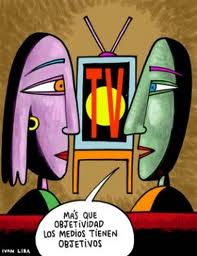
The Power of Misinformation.
Skimming through a book by Bruno Cardeñosa about popular lies, I verified something I had long suspected: the hoax or urban legend about the need to consume eight glasses of water a day, a result of misinformation and the interests of bottled water companies. The book details the reasons and dangers of this information.
This example, as well as the one that recently appeared in the press about a circular object at the bottom of the ocean, which some clever people have rushed to attribute to an unidentified flying object, are examples of how misinformation works and the power it has.
When we gather information that has not been rigorously verified, it is most likely that it has been used by the same media outlets that distribute it. In the Internet age, it is easiest to adorn it with popular attributes, give it an attractive title, and distribute it. If the work has been done well, it will become popular, and after some time we will find that this information, returned in the form of scientific certainty, most likely no organism will bother to clarify things unless absolutely necessary.
We can find the same mode of misinformation in our daily work, where many people participate in a task. The lack of a truthful informer or an effective means of distributing a statement turns reality into whatever is most attractive and easy for everyone to accept, and that's before it's conveniently manipulated. Over time it will become a certainty, and shortly after everyone will be surprised at the difference between what was meant to be communicated and what is actually being understood.
All the gaps, and there are many, that remain uncovered in any type of statement will be filled by popular knowledge becoming reality.
Misinformation or the lack of effective communication is directly responsible for most popular beliefs. Wouldn't it be convenient to start giving it the importance it deserves?
What would happen if there were people dedicated solely to publishing and verifying information? And I'm not referring to journalists. You only have to read a conservative-leaning newspaper and another with progressive tendencies to see how the same news story can have two very different meanings.
What is missing in this society are impartial figures dedicated to validating information by contrasting it with distributed knowledge.
One of the most important dangers of misinformation consists of partial manipulation: half a truth is told and the other half is seasoned with whatever interests us. This way of acting is typical of politicians and the press with a tendency toward a particular ideology. This form of action is based on a very simple rule: one tends to listen to or read what they like and turn a deaf ear to everything else. It seems to me to be a disguised form of deception that consists of selling what people want to hear rather than what is really happening.
Obviously we all have natural preferences, but it is also true that in general we desire to know the truth. Moreover, it is clear to see how the same media outlets that lean toward one side or another later criticize this same way of proceeding in others.
I keep asking myself why there is no higher study of some kind explicitly dedicated to verifying reality and validating it. Perhaps we assume that ultimately we all know what is really happening.
More lies are told for lack of imagination.
truth is also invented. (Antonio Machado)