The spirit of Christmas
Do you want to know the true spirit of Christmas? Follow me through these lines.
Christmas is a celebration that reminds us of the triumph of light, once the winter solstice has arrived, and solstice means the Sun at rest, the light is reborn, the Sun returns and defeats darkness, the days begin from that instant to become longer, with more light.
Christmas represents the days following that instant, three days later the Sun's movement forward begins, and what better way to celebrate it than with bonfires throughout the night? Is not light the protagonist?
In our society and culture, the Northern Hemisphere predominates in influence over the Southern, the reason is logical, it is the most populated part, only 10% of the world's population lives in the Southern Hemisphere, and in some places in the Southern Hemisphere the new year is celebrated on June 21st, exactly with the same spirit and reason as in the North around December 21st.
In any case, the majority religions, the most deep-rooted philosophies of antiquity that still endure, have their beginning in the north, specifically our Christmas celebrations are a reminiscence of Roman culture, and this with crystalline clarity, we may even be surprised by the number of curious details that bring us closer to that Roman society.
In Rome the new year began in March, because there was no other month between December and March.
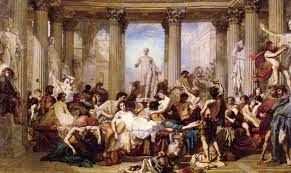
And above all, Christmas has its beginning as a festivity and popular culture in the days of the Roman SATURNALIA, the Saturnalia were festivities dedicated to the god Saturn, the one who evoked the golden age of humanity, the age of greatest splendor, an obvious analogy with paradise.
The Saturnalia were celebrated between December 17th and 23rd.
During the Saturnalia games of chance were allowed, which were punished by Roman law the rest of the year, it is a tradition that still perdures in some places in Europe, undoubtedly propelled by the consumerist frenzy that the media preach, in Spain for example, there is a well-rooted tradition of the Christmas lottery.
During the Saturnalia, bonfires were lit, and now we put illuminated trees, we light candles and the streets are filled with colorful lights that are nothing more than a reminder of the cultural origin of most of the society that inhabits the Northern Hemisphere
During the Saturnalia they committed excesses of all kinds, roles were exchanged and drinking was copious and widespread, Roman laws did not permit such customs during the rest of the year, I think this point is easily recognizable and similar in the present day.
The Romans proclaimed Sol Invictus, the victorious Sun, the moment when light defeats darkness the day after the solstice, this is at Christmas.
Christmas associated with Christianity, has its beginning with the Emperor Constantine, truly Constantine will go down in history as the true architect of the propagation of Christianity, nowhere in the Bible is anything said about the day of Christmas, which should really be called the day of Constantine.
To conclude, I will tell you that they are numerous, yes!, numerous the cults of birth on those days, Mithras also and much earlier, it is said that he was born on December 25th, of a virgin, and that he was worshipped by shepherds who brought him gifts, by the way to his later cult we owe the religious philosophy about good and evil, and there is evidence of other earlier deities that took these dates as the moment of their birth, the reason is symbolic, light and its growth, its victory over darkness, at that moment its heroic destiny was clearly marked.
Christmas is rooted in our nature, or to express it better, what is rooted is the celebration of light, of the Sun's power to overcome darkness